


Online betting gets most of the attention. But walk through any busy high street in Europe or Africa, and you'll still find betting shops with queues. Retail sports betting is not fading; it's evolving.
The offline segment held a significant share of the global sports betting market in 2025, with Europe alone accounting for nearly 44% of global betting revenue. Physical shops continue to attract players who prefer cash, face-to-face interaction, and a social atmosphere.
If you're thinking about opening a betting shop, here's everything you need to know.
What Is Retail Sports Betting?
Retail sports betting means placing wagers in person at a physical location - a betting shop, sportsbook counter, or dedicated terminal. The customer walks in, picks their bet, hands over cash or uses a terminal, and collects winnings on-site.
It's the original format. And in many markets, it's still the most trusted one.
How Does Retail Betting Work?
The process is straightforward. A customer enters the shop and chooses from available markets displayed on screens or printed bet slips. They either place their bet with a cashier or use a self-service betting terminal.
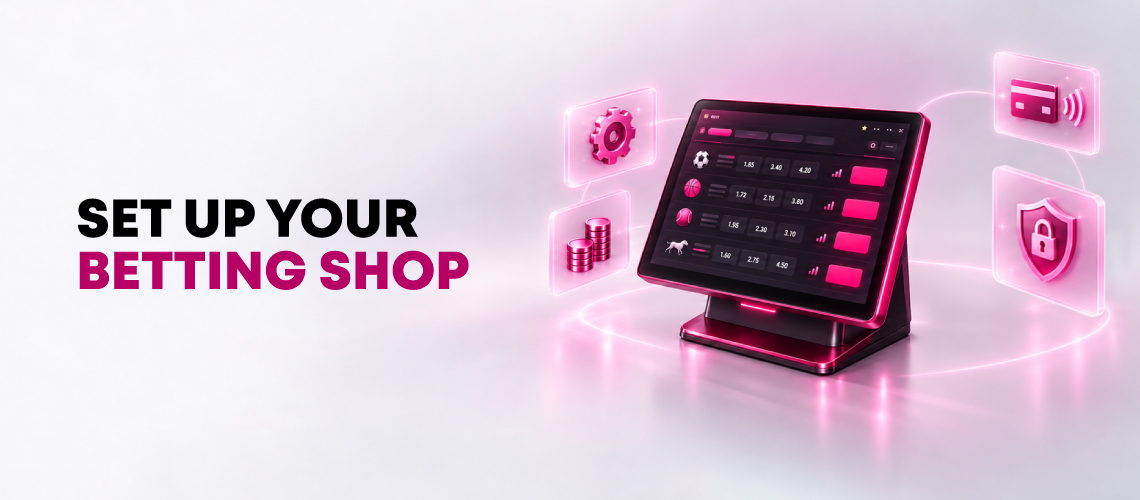
The terminal, or betshop kiosk, connects in real time to a central odds feed. Prices update automatically as markets move. The customer selects their event, enters their stake, confirms the bet, and receives a printed or digital receipt. Winnings are paid out at the counter or directly from the terminal.
Behind the scenes, the operator's platform manages risk, updates odds, and settles markets, just as an online sportsbook does, but with a physical front end.
Why Should You Open a Physical Betting Shop?
Despite the rise of mobile betting, physical shops offer something digital platforms can't easily replicate: community, trust, and cash accessibility. In markets where banking infrastructure is limited or online regulation is strict, a betting shop is often the only viable option for most players.
What Are the Main Business Benefits?
A well-run betting shop generates predictable, recurring revenue from a local customer base. Unlike online operators competing globally, a retail shop often becomes the default destination for bettors in a specific area.
Key advantages:
- Lower customer acquisition cost: local visibility and word-of-mouth do much of the work
- Cash-based revenue: fewer payment processing complications and no chargebacks
- Loyal repeat customers: regulars return consistently, especially around major events
- Easier regulatory entry in many jurisdictions compared to an online licence
How Do Retail and Online Work Together?
Many successful operators run both. A player might place a bet in-store on Saturday and check results online in the evening. If your brand connects both experiences under one account, you keep that player in your ecosystem regardless of where they are.
The practical requirement: a shared player account, a single wallet, and consistent odds across every touchpoint. Players who use both retail and digital channels consistently show higher lifetime value than those who use only one.
What Do You Need Before You Start?
Opening a betting shop requires more preparation than most businesses. Regulation, location, and capital must all be in place before a single terminal is switched on.
What Are the Legal and Licensing Requirements?
This varies significantly by country. In the UK, you need a Premises Licence from the local council and an Operating Licence from the UK Gambling Commission. In other European markets, national gambling authorities issue retail-specific licences with their own requirements.
Key steps that apply in most jurisdictions:
- Research the licensing authority in your target market
- Prepare financial documentation proving operational capacity
- Submit an application with your business plan and compliance framework
- Pass background checks on all directors and key personnel
- Meet premises requirements -layout, signage, responsible gambling materials
- Agree to ongoing reporting and audit obligations
Licence timelines vary from weeks to months depending on the market. Factor this into your launch planning. Operating without a licence carries severe penalties and, in most countries, is a criminal offence.
How Do You Choose the Right Location?
Footfall is everything in retail betting. A well-located shop in a busy area will consistently outperform a better-equipped shop in the wrong spot.
What to look for:
- High foot traffic: near transport hubs, markets, or commercial streets
- Proximity to sports venues or fan areas for event-day peaks
- Visibility: a shop people walk past regularly becomes familiar quickly
- Accessibility: ground floor, easy entrance, parking where relevant
- Competition mapping: understand who else is nearby and what they offer
Rent in prime locations is higher, but the trade-off is usually worth it. A quiet location requires spending far more on marketing to achieve what a good location delivers naturally.
How Do You Set Up Your Betting Shop Step-by-Step?
Once licences and premises are secured, the operational setup begins. This is where technology decisions become critical.
What Software Powers a Modern Betting Shop?
The software is what makes the whole operation run. Retail sportsbook software manages odds, markets, risk, and settlement - all in real time.
A modern retail sports betting platform should include:
- Live odds feed covering pre-match and in-play markets across major sports
- Risk management tools with automated market suspension and liability controls
- Cashier system for managing payouts, deposits, and daily reconciliation
- Reporting dashboard giving the operator full visibility of daily performance
- Responsible gambling tools - session limits, self-exclusion, mandatory under-age checks
Betting terminal software is the interface between the player and all of the above. It needs to be fast, intuitive, and reliable, especially during high-traffic events when dozens of customers are using terminals simultaneously.
How Do You Manage Cash and Payments Securely?
Cash management is one of the highest-risk areas in retail betting. Clear processes reduce that risk significantly.
Best practices:
- Regular till reconciliation at every shift change, not just end of day
- Secure on-premises cash storage with restricted access
- A clear payout verification process to prevent fraud
- Automatic reconciliation between cashier system and platform
- Staff training on AML compliance and suspicious transaction recognition
Where digital payments are available, offering card or mobile payment at the counter reduces cash volume,and the risks that come with it.
How Do You Launch and Grow Your Betting Business?
Opening the shop is the start, not the finish. Customer acquisition and retention require consistent effort.
How Do You Attract Local Players?
The most effective marketing for a betting shop is local and physical. Digital campaigns matter, but your first customers will find you because you're nearby.
What works:
- Opening promotions: a free bet or enhanced odds offer on launch day drives early footfall
- Event-day activations: promotions around major matches create reliable traffic spikes
- Loyalty schemes: simple rewards for repeat visits build the habit
- Local partnerships: sports clubs, cafés, and community venues create referral traffic
- Clear exterior signage: a well-designed shopfront does more than most operators expect
The goal in the first three months is to become the local default. Players who come in once for a big event need a reason to return the following weekend.
How Can BetConstruct AI Help You Get Started?
Setting up a retail betting operation means getting a lot of moving parts to work together: terminals, cashier systems, odds displays, and back-office tools from day one.
BetConstruct AI's betting terminal software covers the full retail setup:
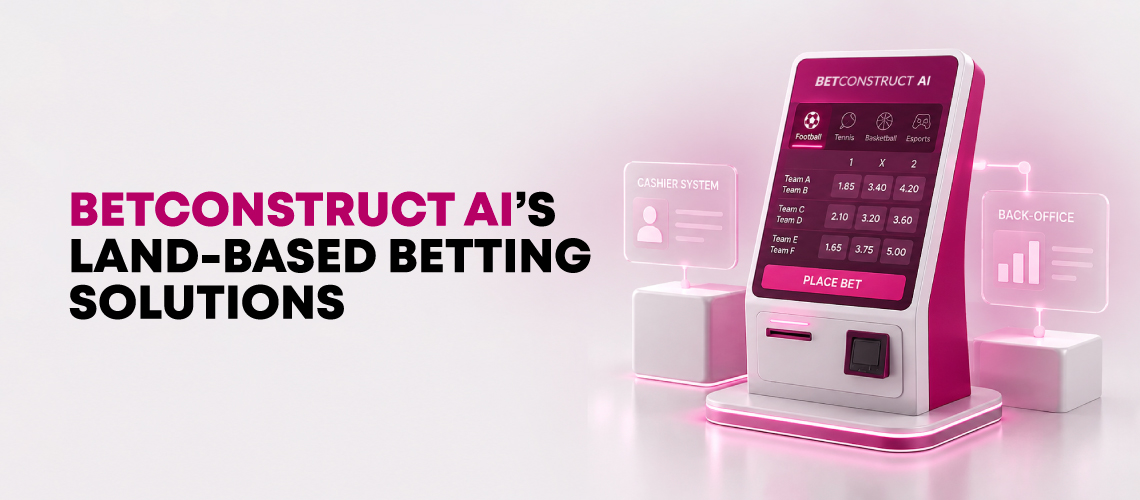
- Betting Terminal: a touchscreen self-service terminal with 24/7 access, anonymous betting, RFID cards, TITO technology, and a built-in cash-in and payout machine. Installs on any Windows PC.
- Betshop Cashier Client: a cashier system for accepting and managing bets, printing tickets, processing payouts, and reporting. Compatible with 100+ hardware devices.
- Web Cashier: a browser-based alternative accessible on any device, with no local installation required. Ideal for operators managing multiple locations.
- Odds Display: a multi-screen management system showing live sportsbook markets, virtual sports, and live casino streaming across your shop's TV monitors.
- Pocket Pro: an Android app that lets cashiers accept bets, process payments, and manage deposits and withdrawals anywhere inside or outside the betshop.
Everything is designed to work together under one platform - scalable from a single shop to a full retail network, with multilingual and multi-currency support built in.
Final Thoughts
Retail sports betting is not a relic. In many markets, it remains the primary way people bet, and in others, it's a profitable complement to a digital operation.
The fundamentals haven't changed: a good location, the right licence, reliable technology, and a customer experience that keeps people coming back. What has changed is the software and hardware available to operators - which is better, faster, and more capable than it has ever been.
Get those foundations right, and a betting shop is a very solid business.